
Balance and Fall Prevention for Seniors: Everyday Moves That Help You Stay Steady
Balance isn’t something most people think about when they’re younger. You walk, turn, reach, and move without giving it a second thought. Over time, though, balance can quietly change. Movements that once felt automatic may start to feel less certain, especially when getting up quickly, stepping off a curb, or moving around in low light.
That shift doesn’t mean something is “wrong.” It simply means your body is asking for a little more awareness and support.
The good news is that balance is not a fixed ability. It can be maintained and even improved with simple, everyday movements that fit naturally into daily life. You don’t need special equipment, intense workouts, or fear-based motivation. You just need consistency and a few smart habits.
This article focuses on practical ways seniors can improve balance, reduce fall risk, and move with more confidence — without turning exercise into a stressful chore.
Why Balance Matters More Than Most People Realize
Balance isn’t just about standing on one foot. It’s a combination of muscle strength, coordination, reaction time, posture, and awareness of where your body is in space.
As we age, several small changes can affect balance at once:
- Muscles may weaken if they aren’t used regularly
- Reaction time can slow slightly
- Vision changes can affect depth perception
- Joint stiffness can limit smooth movement
Individually, these changes may feel minor. Together, they can make everyday movements feel less steady.
The goal of balance training isn’t perfection. It’s confidence. When you trust your ability to move, you move better — and that alone reduces fall risk.
Everyday Moments Where Balance Is Most Challenged
Many falls don’t happen during exercise. They happen during normal daily activities that seem harmless.
Common situations include:
- Getting up from a chair or bed
- Turning too quickly while walking
- Stepping off curbs or uneven surfaces
- Reaching overhead or bending down
- Walking while distracted
Recognizing these moments helps you prepare for them, rather than fear them.
The Role of Awareness in Staying Steady
One of the simplest ways to improve balance is to become more aware of how you move.
That doesn’t mean overthinking every step. It means slowing down slightly, noticing posture, and giving your body time to respond.
Helpful awareness habits include:
- Standing tall instead of leaning forward
- Keeping your gaze level rather than down
- Moving deliberately rather than rushing
- Using support when needed without guilt
These small adjustments add stability without effort.
Simple Balance Exercises Seniors Can Do Daily
Balance exercises don’t need to be long or intense. A few minutes each day can make a meaningful difference when done consistently.
Here are simple movements that fit easily into daily routines.
Weight Shifts
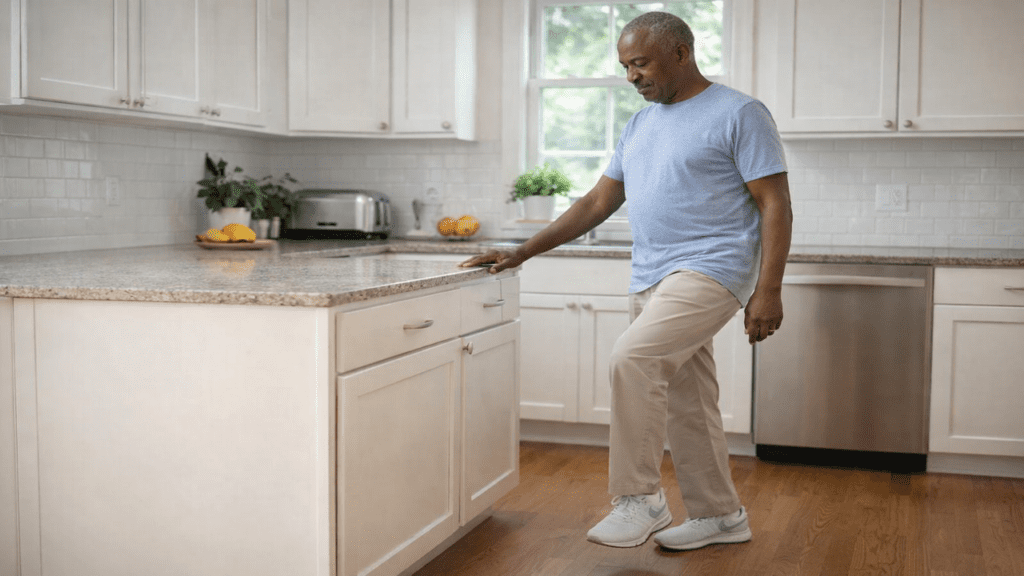
Stand near a counter or chair for support. Slowly shift your weight from one foot to the other, keeping both feet on the floor.
This helps your body relearn how to adjust smoothly.
Heel-to-Toe Walking
Walk slowly in a straight line, placing the heel of one foot directly in front of the toes of the other.
This improves coordination and balance control. Use a wall or counter nearby if needed.
One-Leg Balance With Support
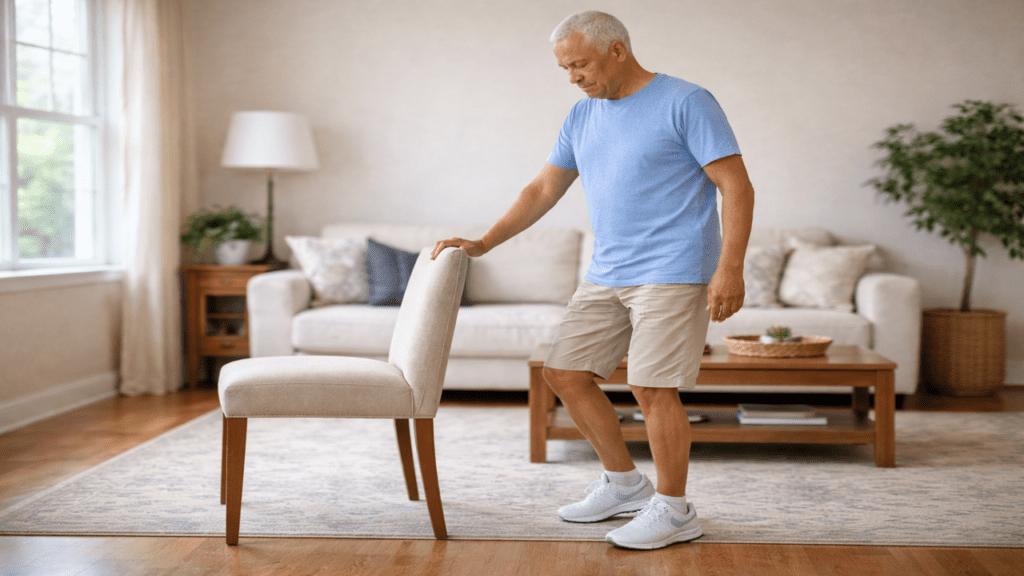
Hold onto a chair or countertop and lift one foot slightly off the floor. Hold for a few seconds, then switch sides.
Even brief holds help strengthen stabilizing muscles.
Slow Controlled Turns
Practice turning your body slowly rather than pivoting quickly. Focus on keeping your feet planted and your movements smooth.
This helps reduce dizziness and missteps.
How Walking Helps Improve Balance (When Done Mindfully)
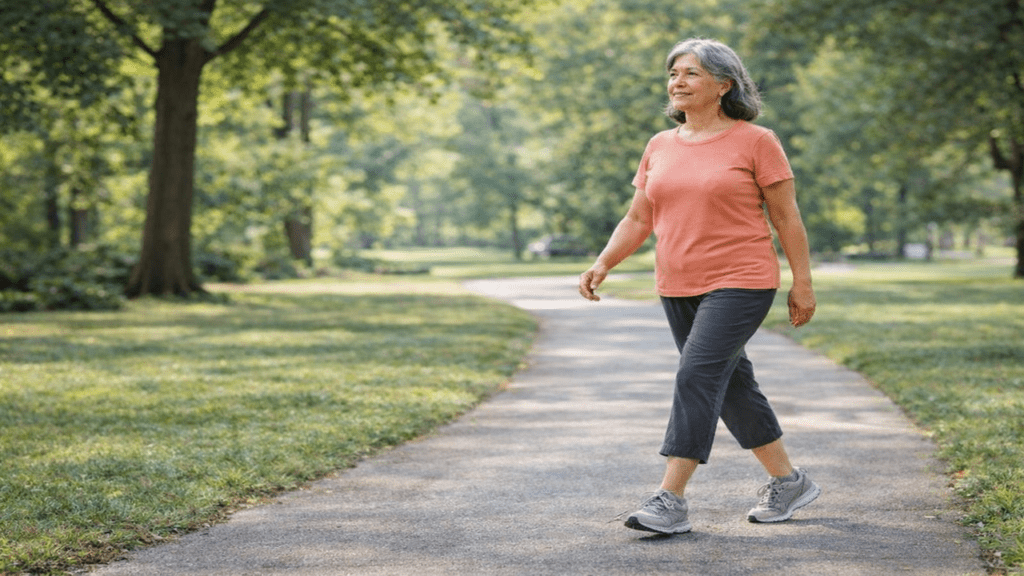
Walking is one of the best balance activities available to seniors — especially when done with awareness.
Walking supports balance by:
- Strengthening leg and core muscles
- Improving coordination between arms and legs
- Reinforcing upright posture
- Encouraging steady, rhythmic movement
Simple walking tips that improve balance:
- Walk at a comfortable, steady pace
- Let your arms swing naturally
- Look ahead, not down at your feet
- Avoid multitasking while walking
Confidence grows when walking feels controlled rather than rushed.
Indoor Balance Practice for At-Home Days
Not every day is ideal for outdoor walking. Weather, fatigue, or joint stiffness can make indoor movement a better option.
Indoor balance practice can be just as effective when done intentionally.
Good indoor options include:
- Standing balance near a kitchen counter
- Walking slowly down a hallway
- Gentle side-to-side stepping
- Practicing getting up and sitting down smoothly
Even short sessions help maintain stability and coordination.
Using Support Without Feeling “Weak”
Many seniors avoid using support because they feel it signals weakness. In reality, smart support increases confidence and allows better movement.
Using a chair, counter, or wall for balance:
- Reduces fear
- Encourages proper form
- Prevents unnecessary strain
- Makes practice safer
Support is a tool, not a failure.
Technology as a Quiet Balance Safety Net
While balance training is mostly physical, technology can provide reassurance.
Keeping a smartphone nearby while moving can:
- Increase confidence when walking alone
- Provide quick access to help if needed
- Reduce anxiety about exercising independently
The phone doesn’t need to be used constantly. Simply knowing it’s there can make movement feel safer.
Product Recommendation: A Simple Balance Training Aid
Balance training doesn’t require complex equipment. One simple option that many seniors find helpful is a foam balance pad.
These pads are:
- Lightweight
- Soft but stable
- Designed for standing exercises
- Easy to store and use at home
Used near a counter or chair, a balance pad adds gentle challenge without increasing risk. It’s a practical tool for those who want to improve balance gradually.
Building Confidence Through Consistency
Balance improves with repetition, not intensity. Doing a little every day is far more effective than occasional long sessions.
Helpful consistency tips:
- Practice balance at the same time each day
- Pair exercises with daily routines
- Focus on calm, controlled movement
- Stop before fatigue sets in
Progress may feel slow, but confidence often improves sooner than strength.
The Mental Side of Balance and Falls
Fear plays a larger role in falls than many people realize. When someone becomes afraid of falling, they often move more stiffly, which actually increases risk.
Replacing fear with awareness is key.
Remind yourself:
- Balance can improve at any age
- Small improvements matter
- Support is smart, not shameful
- Confidence grows with practice
A calm mindset leads to steadier movement.
A Realistic Perspective on Fall Prevention
Fall prevention isn’t about eliminating risk. It’s about reducing unnecessary risk and improving how your body responds.
That includes:
- Maintaining strength
- Practicing balance
- Moving with awareness
- Using support wisely
These habits work together to keep you steady.
A Steady, Encouraging Takeaway
Balance changes with age, but loss of balance is not inevitable. With simple daily movements, mindful walking, and a calm approach to practice, seniors can stay steady, confident, and independent.
You don’t need to do everything at once. Start small. Stay consistent. Trust the process.
Staying upright isn’t about being perfect — it’s about being prepared.
And preparation begins with a single, steady step.

My name is Larry, and I’d like to thank you for visiting Senior Citizens Fitness. I’m so passionate about staying fit in my later years. I hope you found some useful information here. Thanks again, and please subscribe and leave comments.
If you are a Senior like me and passionate about something, and want to blog about it in your spare time, and possibly earn a decent income. Check this out.