
Staying strong after 60 isn’t about lifting heavy weights or spending hours in a gym. It’s about maintaining the kind of strength that supports everyday life — standing up easily, climbing stairs without hesitation, carrying groceries without strain, and moving with confidence.
For many seniors, the biggest obstacle to strength training isn’t ability. It’s uncertainty. Fear of falling. Fear of doing something wrong. Fear of overdoing it.
That’s where chair strength training comes in.
Using a sturdy chair provides stability, support, and confidence. It turns strength training into something accessible and safe — something that can be done right at home without complicated equipment.
When done consistently and correctly, chair exercises help preserve muscle, improve balance, and protect independence.
Why Strength Training Matters More After 60
As we age, muscle naturally declines. This process, called sarcopenia, happens gradually. The less we use our muscles, the faster strength fades.
That loss of strength doesn’t just affect appearance — it affects daily living.
Strong muscles help you:
- Stand up from a seated position
- Walk with better posture
- Climb stairs more comfortably
- Carry everyday items safely
- Reduce fall risk
Strength training supports balance because stronger legs and core muscles stabilize the body during movement. The result is not just physical strength, but greater confidence in everyday activities.

Why a Chair Makes Strength Training Safer
A sturdy chair offers something extremely important: stability.
When seniors feel supported, they move more naturally. A chair reduces the fear of losing balance, which often allows exercises to be performed more effectively.
A good chair for exercise should:
- Have a firm seat
- Does not have wheels
- Be stable on a flat surface
You’re not using the chair to avoid movement — you’re using it to make movement safer.
Simple Chair Strength Exercises for Seniors
These exercises focus on practical strength. Move slowly. Breathe naturally. Stop if you feel pain.
Sit-to-Stand
This is one of the most important strength exercises for seniors because it directly supports independence.
How to do it:
- Sit near the edge of the chair
- Place feet flat on the floor
- Lean slightly forward
- Stand up slowly
- Sit back down with control
This builds leg strength and improves balance at the same time.
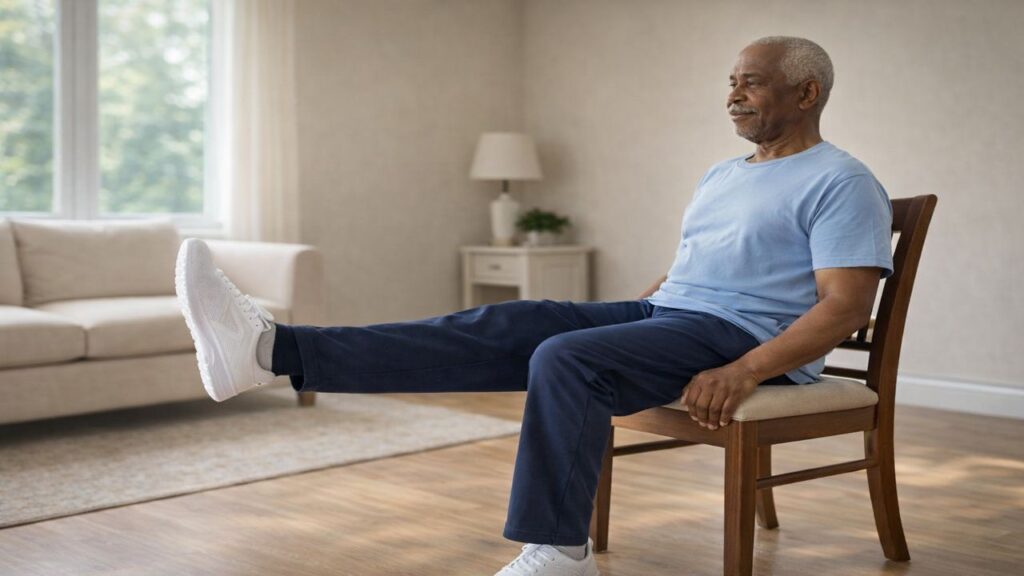
Seated Leg Lifts
This helps strengthen the thighs and improve stability while walking.
- Sit tall in the chair
- Extend one leg straight out
- Hold briefly
- Lower slowly
- Switch sides
Slow, controlled movement matters more than speed.
Seated Marching
This exercise strengthens hip muscles and supports walking endurance.
- Sit upright
- Lift one knee toward your chest
- Lower slowly
- Alternate sides
Keep the movement steady and controlled.
Seated Arm Raises
Upper body strength supports posture and daily tasks.
- Sit tall
- Raise arms forward or to the side
- Lower slowly
Light resistance bands can be added later if desired.

Seated Core Twist
Core strength supports balance and reduces strain on the back.
- Sit upright
- Cross arms over your chest
- Slowly rotate your upper body
- Return to center
- Switch sides
Keep the movement gentle and controlled.
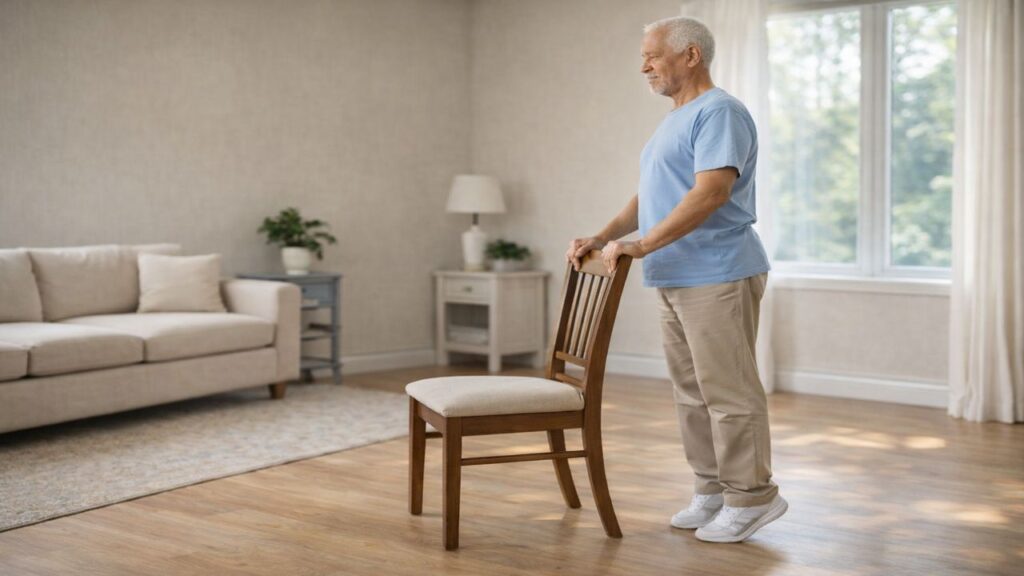
Heel Raises Holding the Chair
This can be done standing behind the chair for support.
- Hold the back of the chair
- Lift heels off the floor
- Lower slowly
This strengthens the calves and improves ankle stability.
How Often Should Seniors Do Chair Strength Exercises?
Consistency matters more than intensity.
Two to three times per week is enough for most seniors. Muscles need time to recover, so daily strength training is not necessary.
If you feel mildly tired afterward but not sore or strained, that’s usually a good sign. The goal is gradual progress, not exhaustion.
Common Mistakes to Avoid
Even simple exercises can lose effectiveness if rushed or performed carelessly.
Watch out for:
- Moving too quickly
- Holding your breath
- Using momentum instead of muscle
- Slouching during seated exercises
- Skipping rest days
Slow, steady movement builds better strength than fast repetitions.
Adding Simple Resistance Safely
Once chair exercises feel comfortable, light resistance can enhance results.
Resistance loop bands are an excellent option because they are:
- Lightweight
- Affordable
- Easy to store
- Gentle on joints
A reliable option many seniors find useful is the Fit Simplify Resistance Loop Bands, which come in multiple resistance levels. Starting with the lightest band allows you to build strength gradually without straining.
Resistance should never cause sharp pain. It should feel challenging but manageable.
Strength Builds Confidence
One of the most overlooked benefits of strength training is confidence.
When you feel stronger:
- You move more freely
- You hesitate less
- You worry less about falling
- Everyday tasks feel easier
That confidence carries into walking, balance, and even posture.
Chair strength training isn’t about athletic performance. It’s about preserving independence and supporting the activities that matter most in daily life.
Frequently Asked Questions About Chair Strength Training for Seniors
Is chair strength training safe for seniors?
Yes, chair strength training is generally safe for most seniors when exercises are performed slowly and with proper form. Using a sturdy chair adds stability and reduces fall risk. However, anyone with medical conditions, joint pain, or recent surgery should consult a healthcare provider before starting a new exercise routine.
How often should seniors do chair exercises?
Most seniors benefit from chair strength exercises two to three times per week. This allows muscles to strengthen while still having time to recover. Consistency matters more than intensity, so short, regular sessions are more effective than occasional long workouts.
Can chair exercises really build strength?
Yes. Even seated movements activate muscles in the legs, core, and upper body. When done with controlled movement and proper posture, chair exercises help maintain muscle tone, improve balance, and support everyday activities like standing, walking, and lifting light objects.
What kind of chair is best for exercise?
A sturdy, stable chair without wheels is best. The seat should be firm and positioned on a flat surface. Avoid soft couches or rolling office chairs, as they reduce stability and can increase fall risk.
Should seniors use weights during chair workouts?
Light resistance can be added once exercises feel comfortable. Resistance bands or light dumbbells can increase strength gradually. The key is starting with low resistance and increasing slowly, never pushing into sharp pain or strain.
How long should a chair workout last?
Most chair strength sessions can last between 15 and 25 minutes. The focus should be on controlled movement and good form rather than the length of time. A shorter session done consistently is more beneficial than an occasional long workout.
Staying Strong at Home
Strength doesn’t require a gym. It doesn’t require complicated machines. It doesn’t require heavy weights.
What it does require is consistency.
A sturdy chair. A few simple movements. A calm, steady pace.
When strength training feels safe and manageable, it becomes something you can continue — not something you avoid.
And that consistency is what keeps muscles active, balance steady, and independence intact.
Strong doesn’t have to mean intense. After 60, strong means capable, steady, and confident — and that’s exactly what chair strength training helps you maintain.

My name is Larry, and I’d like to thank you for visiting Senior Citizens Fitness. I’m so passionate about staying fit in my later years. I hope you found some useful information here. Thanks again.