
Morning Stretch Routine for Seniors
Mornings can feel different as we age. The body may take a little longer to warm up. Joints may feel tight. Muscles may feel less responsive during those first few steps out of bed. What once felt automatic now requires a moment of adjustment.
That stiffness is not unusual. It’s simply the body’s way of signaling that it needs movement.
A gentle morning stretch routine helps wake up the muscles, improve circulation, and restore mobility after hours of rest. Instead of forcing your body into activity, stretching eases it into motion. The result is smoother walking, better posture, and greater comfort throughout the day.
You don’t need advanced flexibility. You don’t need complicated routines. You just need calm, consistent movement.
Why Mornings Feel Stiffer Over Time
During sleep, muscles relax, and joints remain mostly still for several hours. As we get older, joints produce less lubricating fluid overnight. That fluid is essential for smooth movement. When it decreases, joints can feel tight or “sticky” first thing in the morning.
In addition, connective tissues naturally lose some elasticity with age. That doesn’t mean flexibility disappears — it just means it requires more regular attention.
Reduced activity levels can also contribute to stiffness. The less frequently muscles and joints move through their full range of motion, the tighter they tend to feel.
The good news is that the body responds well to gentle movement. Even small stretching sessions can noticeably reduce morning tightness.

How Morning Stretching Helps the Body
Stretching first thing in the morning offers several benefits that go beyond flexibility.
It can:
- Increase blood flow to muscles
- Improve joint lubrication
- Reduce muscle tension
- Support upright posture
- Prepare the body for walking and balance activities
Stretching also promotes awareness. When you move slowly and deliberately, you notice areas of tightness before they become uncomfortable later in the day.
Morning stretching isn’t about pushing limits. It’s about creating ease.
A Simple Morning Stretch Routine for Seniors
These stretches can be done beside the bed or in a sturdy chair. Move slowly and breathe normally. Stretch to the point of gentle tension, not pain.
1. Seated Neck Rolls
Neck stiffness is common, especially if you sleep in one position or use multiple pillows.
Sit upright in a sturdy chair with your feet flat on the floor. Slowly tilt your head toward one shoulder. Gently roll forward toward your chest and continue to the opposite shoulder. Keep the motion slow and controlled.
Avoid rolling your head fully backward. The goal is gentle mobility, not deep stretching.
This movement reduces tension in the neck and upper shoulders, helping improve posture for the day ahead.
2. Shoulder Rolls
Rounded shoulders often develop gradually over time, especially with extended sitting or reading.
Sit or stand tall. Slowly lift your shoulders toward your ears, roll them back in a circular motion, and relax them downward. Repeat several times, then reverse direction.
Shoulder rolls increase circulation in the upper back and help counteract stiffness from sleep. They also encourage better alignment of the spine.
Smooth, relaxed movements are more effective than large, exaggerated circles.
3. Seated Hamstring Stretch
Tight hamstrings can affect walking stride and lower back comfort.
Sit near the edge of a firm chair. Extend one leg forward with your heel on the floor and toes pointing upward. Keep your back straight and gently lean forward from the hips.
You should feel mild tension along the back of the thigh. Avoid rounding your back or bouncing into the stretch.
Hold briefly, then switch sides.
This stretch supports walking comfort and reduces strain on the lower back.
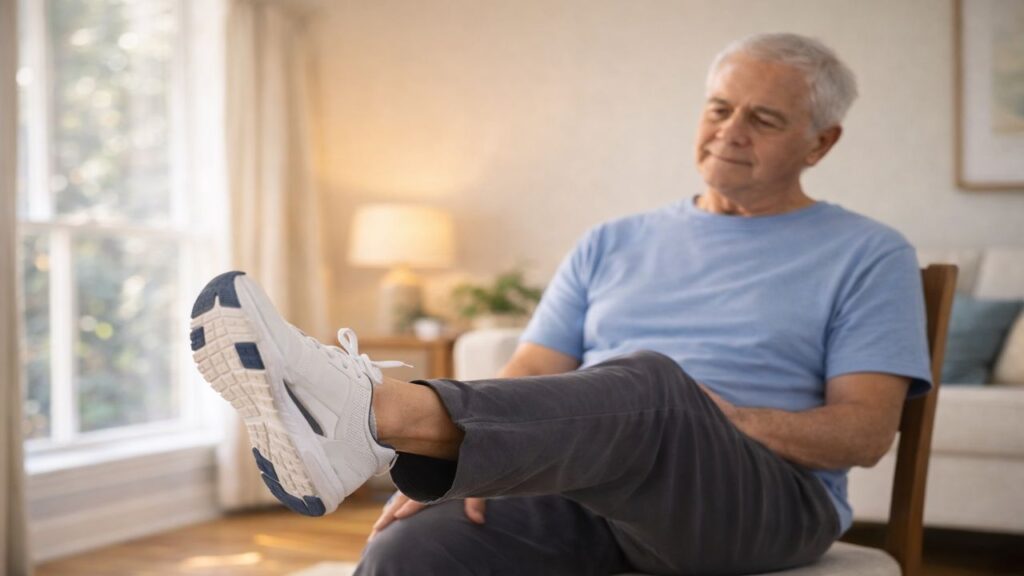
4. Ankle Circles
Ankles play a critical role in balance and stability.
While seated, lift one foot slightly off the floor. Slowly rotate your ankle in controlled circles. Change direction after several rotations, then switch feet.
Ankle circles improve joint mobility and prepare the feet for walking. They are especially helpful for seniors who notice stiffness during the first few steps of the day.
Small, controlled circles are enough. There’s no need to rush.
5. Gentle Standing Side Reach
Stand with your feet about shoulder-width apart. Raise one arm overhead and gently lean toward the opposite side. Return to center and switch arms.
This stretch opens the sides of the torso and promotes spinal mobility. It also encourages upright posture, which supports balance and breathing.
Move slowly and avoid leaning too far. The stretch should feel comfortable, not forced.
6. Calf Stretch Against a Wall
Calf tightness can affect both walking comfort and balance control.
Stand facing a wall. Place one foot behind the other. Keep the back heel flat on the floor and gently lean forward until you feel mild tension in the calf.
Hold briefly, then switch legs.
Flexible calves help maintain a smooth walking stride and reduce strain on the knees and ankles.
How Long Should a Morning Stretch Routine Take?
A complete routine can take as little as ten to fifteen minutes.
You don’t need long sessions to see results. In fact, shorter sessions done daily are often more effective than occasional long routines.
If time is limited, choose three or four stretches and perform them consistently. Even five focused minutes can noticeably reduce stiffness.
The key is repetition. The body responds best to steady habits.
Common Stretching Mistakes to Avoid
Stretching should feel controlled and calm. Certain habits can reduce effectiveness or increase risk.
Avoid:
- Bouncing into stretches
- Holding your breath
- Stretching into sharp pain
- Moving too quickly
- Ignoring posture
Breathing naturally and maintaining good alignment make stretching safer and more beneficial.
Creating a Comfortable Stretching Space
You don’t need a large workout area. A small, clear space near your bed or in the living room works well.
Make sure:
- The floor is stable
- Lighting is adequate
- You have a sturdy chair nearby
- You wear supportive footwear if standing
A comfortable environment encourages consistency.

Simple Equipment That Can Help
Stretching doesn’t require special tools, but a few items can increase comfort.
A supportive, non-slip mat such as the Retrospec Solana Yoga Mat provides cushioning for standing stretches. A stretching strap can help maintain posture during hamstring stretches without straining the back.
Equipment should make stretching easier, not more complicated.

Yoga Mats
Frequently Asked Questions About Morning Stretching for Seniors
1. Is it safe to stretch immediately after waking up?
Yes, as long as movements are gentle and controlled. Avoid deep or aggressive stretching right away. Start slowly and gradually increase the range of motion as your body warms up.
2. How often should seniors stretch?
Daily stretching is generally safe and beneficial for most seniors. Consistency supports flexibility and reduces stiffness over time.
3. How long should each stretch be held?
Holding each stretch for 10 to 20 seconds is usually sufficient. There is no need to hold stretches for extended periods, especially first thing in the morning.
4. Should stretching cause discomfort?
Stretching should create mild tension but not sharp or intense pain. If pain occurs, ease out of the stretch immediately.
5. Can stretching improve balance?
Yes. Improved flexibility allows smoother movement patterns, which can support better coordination and balance during walking and daily tasks.
6. Is stretching enough exercise on its own?
Stretching improves mobility and flexibility, but it does not replace strength training or walking. It works best as part of a balanced movement routine.
Start the Day With Movement That Feels Good
Mornings don’t have to feel stiff and sluggish. A short stretch routine can help your body transition from rest to movement with greater ease.
Stretching isn’t about forcing flexibility. It’s about maintaining comfort and mobility so daily activities feel smoother and more manageable.
When you start the day with gentle movement, you prepare your body for walking, standing, and staying active. Over time, that simple habit can make mornings feel less restricted and steadier.
Small routines done consistently often create the greatest long-term comfort.

My name is Larry, and I’d like to thank you for visiting Senior Citizens Fitness. I’m so passionate about staying fit in my later years. I hope you found some useful information here. Thanks again.